Translate Slovenian PDFs & documents to English scanned or digital — without breaking the layout
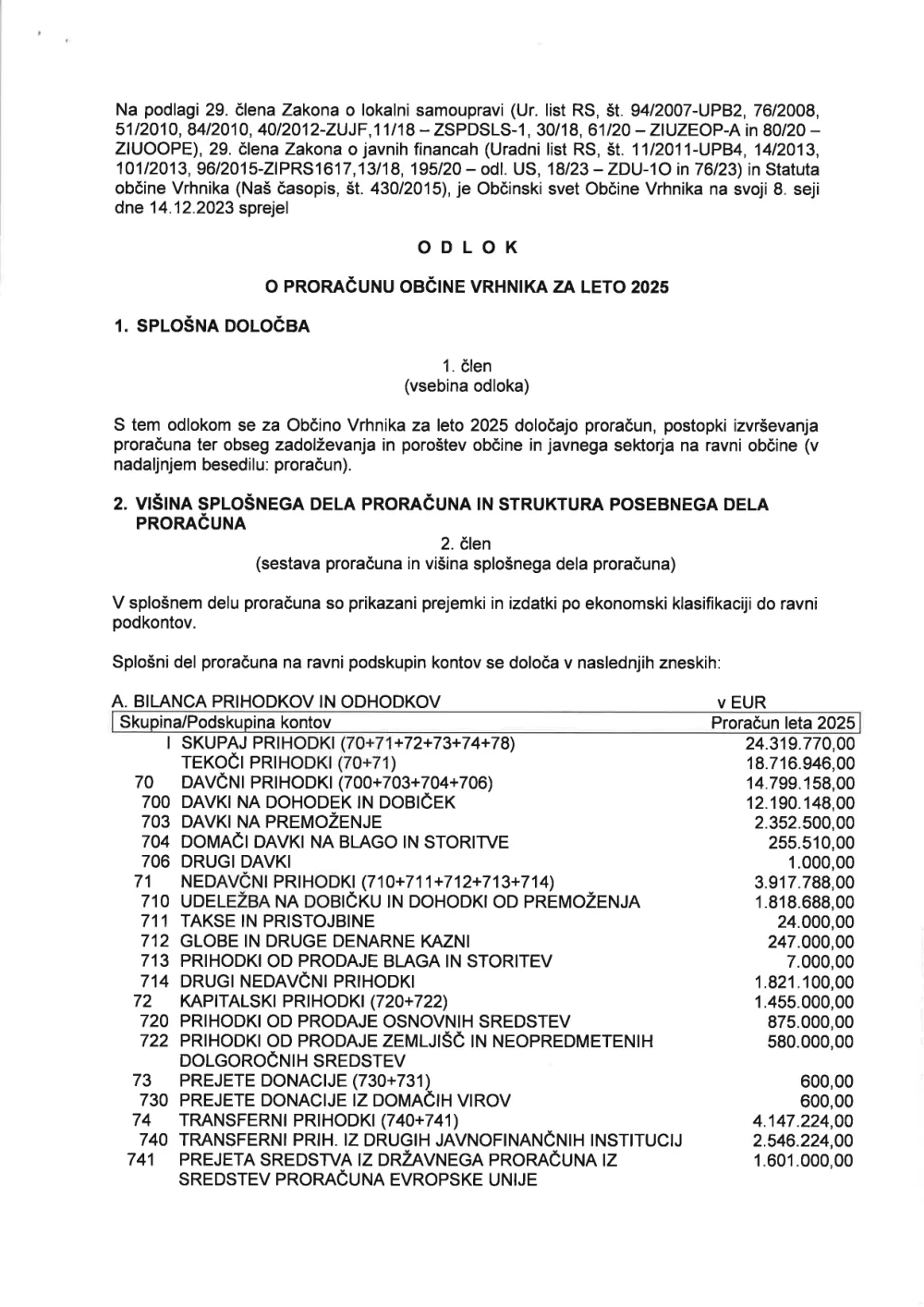
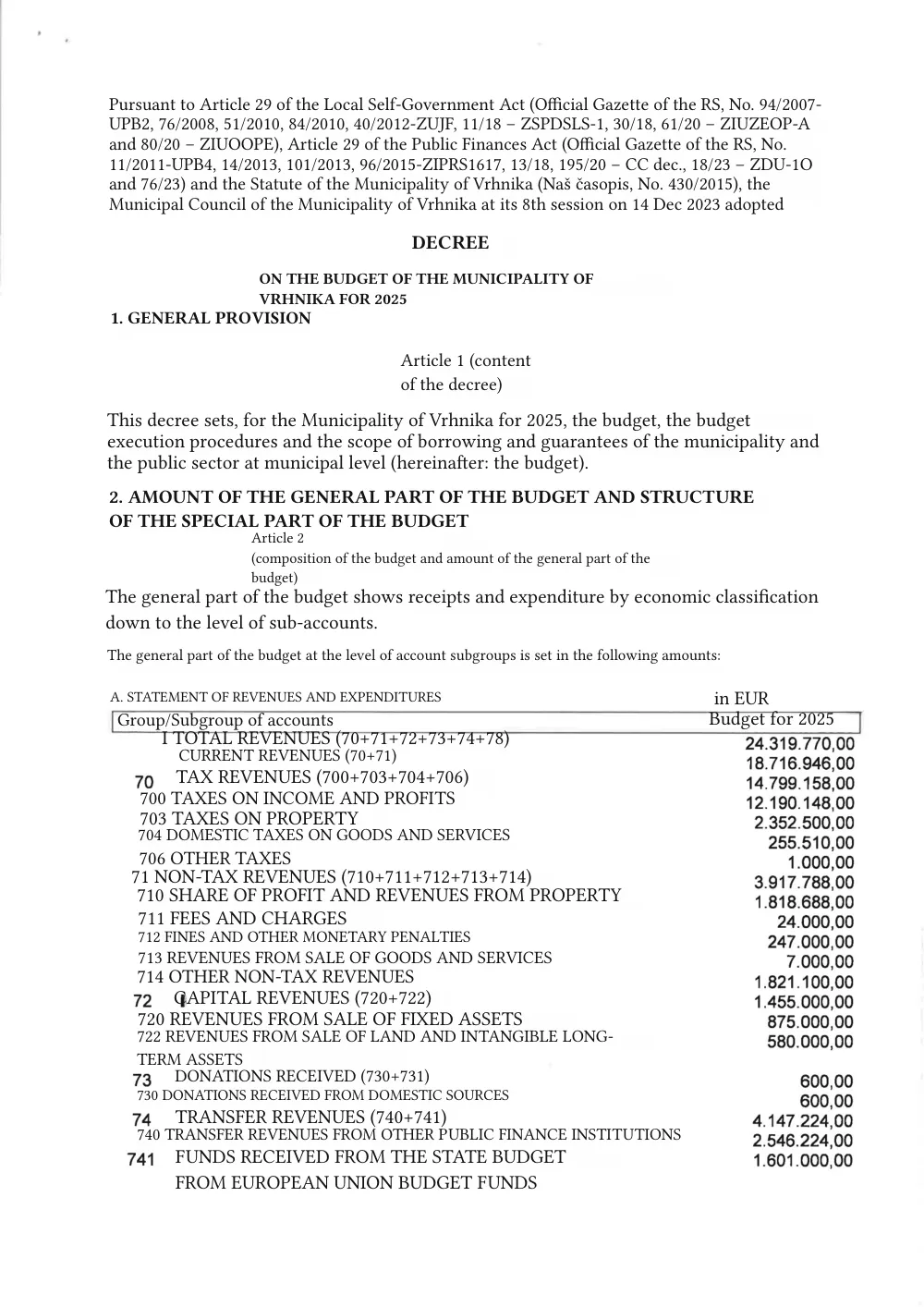
People who buy a home, inherit property or start a company in Slovenia receive court inheritance decisions, land-registry extracts and company register extracts. Bidders at municipal public auctions (javna dražba) need to understand the conditions, deposit and deadlines first. Companies working with Slovenian municipalities and public bodies read council ordinances (odlok) and budgets, and students who studied in Slovenia need an English version of their transcript when applying to their next school. Article numbers, account codes and amounts stay on their original lines; only the words change to English.
Only č, š and ž: close to Croatian, but different
The standard Slovenian alphabet has 25 letters, and only three of them carry marks: č, š and ž. Croatian ć and đ are not among them and appear only in loanwords and foreign names. That makes surnames a trap: the same name is Kovačič in Slovenia and Kovačić in Croatia, two distinct spellings on official documents that must not be corrected into each other. Slovenian also keeps the dual number, with its own endings for two of something: en člen (one article), dva člena (two articles), trije členi (three articles). Because člena is also the genitive singular, na podlagi 29. člena in a legal preamble means on the basis of Article 29. Amounts are written 1.250.000,00, with a point for thousands and a comma for decimals, and laws are cited by issue of the Uradni list RS (Official Gazette).
Common scanned Slovenian documents we translate
These are the Slovenian-language documents people most often translate to English — each keeps its original layout, seals, and tables.
- Municipal ordinances and budgets (odlok, odlok o proračunu)
- Public auction and sale notices (javna dražba)
- Land-registry extracts (izpisek iz zemljiške knjige)
- Inheritance decisions (sklep o dedovanju)
- Birth and marriage register extracts (izpisek iz matičnega registra)
- Company register extracts (izpisek iz sodnega registra)
How to translate a scanned Slovenian document
Upload your PDF
Drop in a scanned Slovenian PDF (one from your phone's scanner app works) or a digital PDF. Image-only PDFs are fine — no text layer needed.
We read & translate
OCR extracts the Slovenian text, then it's translated to English while the original text is erased from the page.
Download, layout intact
Get a clean PDF where tables, figures, stamps, and numbers sit exactly where they were.
Slovenian → English — frequently asked
I can't tell Slovenian from Croatian. Which document language should I pick?
The letters are the quickest test. If the page has ć or đ, it is most likely Croatian; if it has only č, š and ž, along with words like odlok, občina and člen, it is Slovenian. The two languages share many words but differ in spelling and endings, and picking the wrong one affects both reading and translation. Check names against ID documents at the end, since -ič and -ić differ by a single mark.
Can a municipal budget full of account codes and amounts be translated?
Yes. Account codes, their indentation and every amount stay on their original lines, and the item names are translated into English. Where the English runs longer than the Slovenian the type is set smaller, so some lines look smaller than their neighbors. Before using it, check the totals and key figures against the original.
I want to bid at a municipal property auction in Slovenia. Can I read the notice in English first?
Yes. The conditions, deposit (varščina), payment account and deadlines in the auction notice stay in their original positions in the English version, so you can go through them point by point. Register and bid exactly as the original instructs and within its deadlines, and put any questions to the contact person named in the notice.
Choose your plan
Simple, scan-friendly pricing. Pages are pages — no multiplier for scanned files.
Pay-as-you-go
Translate a few pages. No commitment.
$0.30 a page, from 10 pages — you pay for exactly 10 pages.
- Pages never expire
- Up to 300 pages and 100 MB per file
Lite
Most popularFor individuals with scans to translate every month.
- $0.09 / page
- 100 pages every month
- 5 bonus pages, refreshed daily
- Up to 300 pages and 100 MB per file
- Pages reset each month
Pro
For high-volume users with scans to translate every week.
- $0.06 / page
- 500 pages every month
- 5 bonus pages, refreshed daily
- Unused pages roll over (up to 1,500)
- Up to 300 pages and 100 MB per file
Translate scanned PDFs in other languages
Guides on translating scanned documents
Can ChatGPT Translate a Scanned PDF? What Works and What Doesn't
Getting a scanned PDF into ChatGPT takes a workaround, and what comes back is text, or a rebuilt page you'll want to check. Here's how to do it and where it breaks.
Read guideTranslate a Scanned PDF on Your Phone (iPhone & Android)
Camera-translate apps are great for reading a page on the spot, but they don't give you a file — here's how to get an actual translated PDF from your phone.
Read guideWhy Does My Scanned PDF Translate to Gibberish? (And How to Fix It)
Random symbols, blank pages, or 'PDF tools are temporarily offline' — the cause is almost always the same one thing, and it's fixable.
Read guide