Translate Greek PDFs & documents to English scanned or digital — without breaking the layout
Many of the Greek documents people need in English come from family: a house inherited in Greece, a contract drawn up by a notary, letters from the tax office. Greek families in Australia, the U.S., the UK and Germany often need to read these before deciding whether to call a lawyer or a notary. Graduates applying abroad need their degree and transcript in English, and companies dealing with Greek municipalities read the spending decisions and other administrative acts published on Diavgeia. Reglyph replaces the Greek on the scanned page with English and leaves letterheads, reference numbers and amounts where they were, so the two versions can be compared line by line.
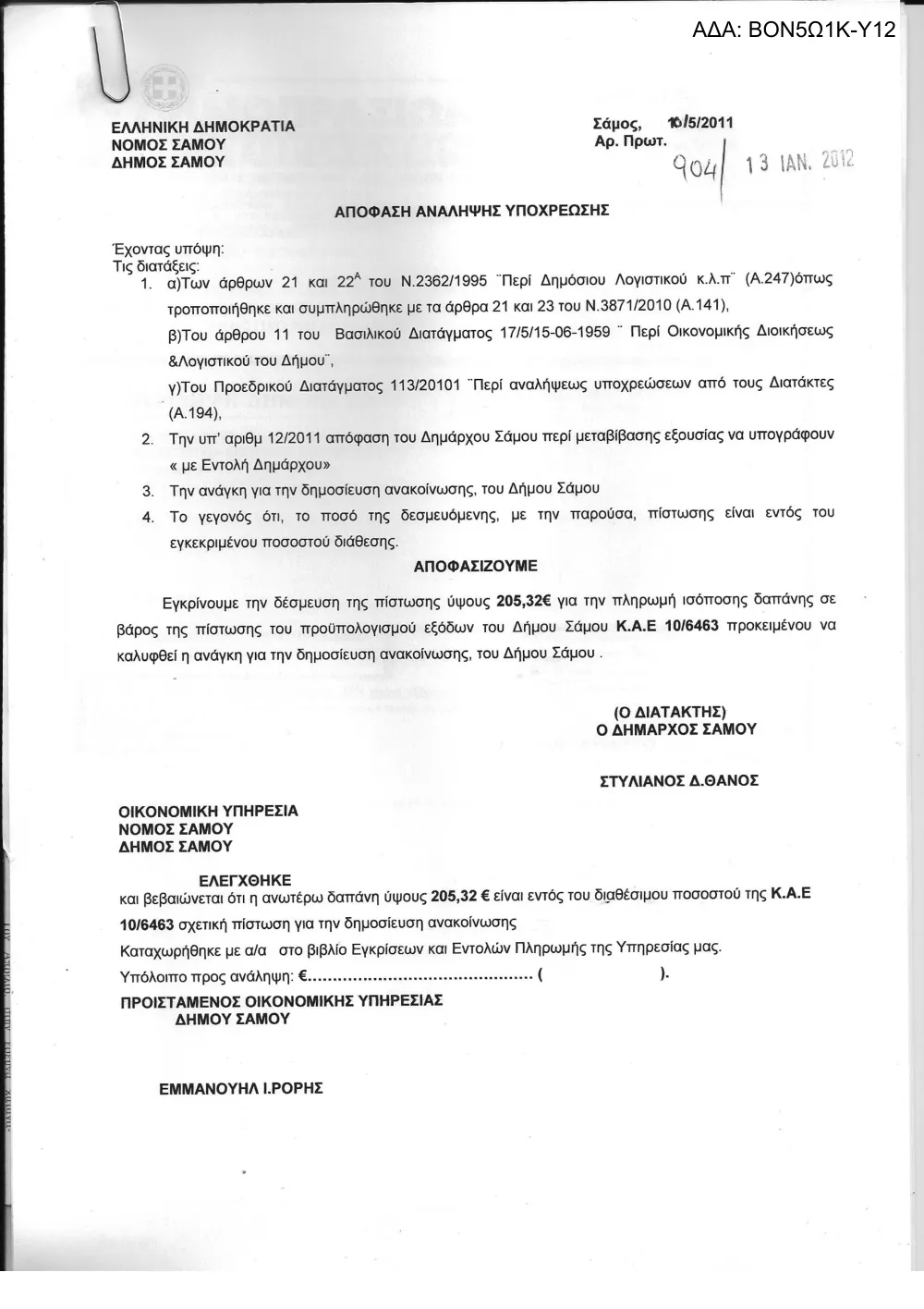
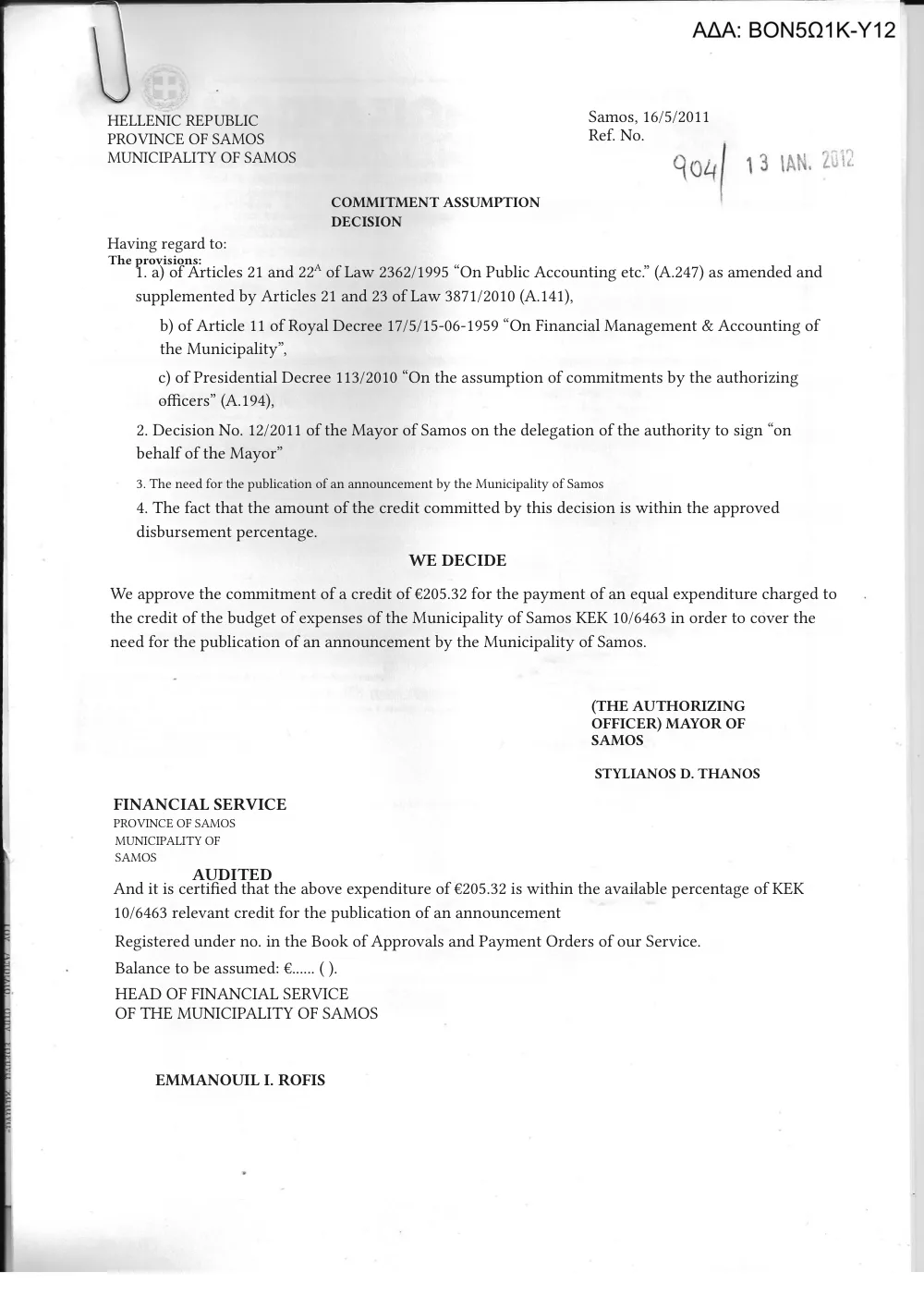
Accents, final sigma and all-caps headings
Almost every Greek word of more than one syllable carries an accent (τόνος), some vowels take a diaeresis (ϊ, ϋ), and σ becomes ς at the end of a word. Official headings are usually set in capitals, and words in all caps drop their accents, as in ΑΠΟΦΑΣΗ (decision), which removes one of the clues OCR relies on. About a dozen Greek capitals look exactly like Latin letters but stand for different sounds: Ρ is R, and in the transliteration used for passports Η becomes I, so ΜΙΧΑΗΛ should come out as MICHAIL, not MIXAHL. Documents printed before the 1982 switch to the monotonic system often use polytonic marks, with two or three signs stacked on one letter, so check those pages more closely. Amounts are written 1.250,50 € with a decimal comma, and dates run day/month/year.
Common scanned Greek documents we translate
These are the Greek-language documents people most often translate to English — each keeps its original layout, seals, and tables.
- Birth and marriage registry records (ληξιαρχική πράξη γέννησης / γάμου)
- Family status certificates (πιστοποιητικό οικογενειακής κατάστασης)
- Notarial contracts and acceptances of inheritance (συμβόλαιο, πράξη αποδοχής κληρονομιάς)
- Property declarations and property-tax documents (Ε9, ΕΝΦΙΑ)
- Degree certificates and transcripts (πτυχίο, πιστοποιητικό αναλυτικής βαθμολογίας)
- Public-body decisions posted on Diavgeia (απόφαση, with an ΑΔΑ number)
How to translate a scanned Greek document
Upload your PDF
Drop in a scanned Greek PDF (one from your phone's scanner app works) or a digital PDF. Image-only PDFs are fine — no text layer needed.
We read & translate
OCR extracts the Greek text, then it's translated to English while the original text is erased from the page.
Download, layout intact
Get a clean PDF where tables, figures, stamps, and numbers sit exactly where they were.
Greek → English — frequently asked
I inherited property in Greece. Can I read the notary's and the tax office's documents in English first?
Yes. Scan the documents to PDF and upload them; the English version keeps the original layout, with property details, areas, amounts and dates in the same positions, so you and your lawyer can go through it line by line. If all you have is a phone picture, rescan the page with your phone's scanner app, upload the PDF in your phone's browser and download the translated PDF. Anything you sign or submit follows the requirements of the notary, lawyer or receiving office, which usually means a certified translation. Our version tells you what every page says before you meet your lawyer.
Will Greek names come out spelled the way they are in my passport?
Names are transliterated into Latin letters, but one Greek name often has several spellings in use: Γιώργος can be Giorgos, Yiorgos or Yorgos. Passports follow a fixed transliteration scheme, the spelling a person uses day to day may differ, and a translation cannot know which one you need. Check every name that has to match an ID against the passport, because one misread letter is enough to make a name stop matching.
Will amounts and dates be changed?
Figures, law numbers and reference numbers stay as they are, but the way they are written can change. Amounts are often converted to English notation, so 1.250,50 € becomes €1,250.50, with the decimal comma turned into a decimal point. Dates are sometimes rewritten in English month/day order too, so check any deadline against the original.
Choose your plan
Simple, scan-friendly pricing. Pages are pages — no multiplier for scanned files.
Pay-as-you-go
Translate a few pages. No commitment.
$0.30 a page, from 10 pages — you pay for exactly 10 pages.
- Pages never expire
- Up to 300 pages and 100 MB per file
Lite
Most popularFor individuals with scans to translate every month.
- $0.09 / page
- 100 pages every month
- 5 bonus pages, refreshed daily
- Up to 300 pages and 100 MB per file
- Pages reset each month
Pro
For high-volume users with scans to translate every week.
- $0.06 / page
- 500 pages every month
- 5 bonus pages, refreshed daily
- Unused pages roll over (up to 1,500)
- Up to 300 pages and 100 MB per file
Translate scanned PDFs in other languages
Guides on translating scanned documents
Can ChatGPT Translate a Scanned PDF? What Works and What Doesn't
Getting a scanned PDF into ChatGPT takes a workaround, and what comes back is text, or a rebuilt page you'll want to check. Here's how to do it and where it breaks.
Read guideTranslate a Scanned PDF on Your Phone (iPhone & Android)
Camera-translate apps are great for reading a page on the spot, but they don't give you a file — here's how to get an actual translated PDF from your phone.
Read guideWhy Does My Scanned PDF Translate to Gibberish? (And How to Fix It)
Random symbols, blank pages, or 'PDF tools are temporarily offline' — the cause is almost always the same one thing, and it's fixable.
Read guide